
 EN
EN
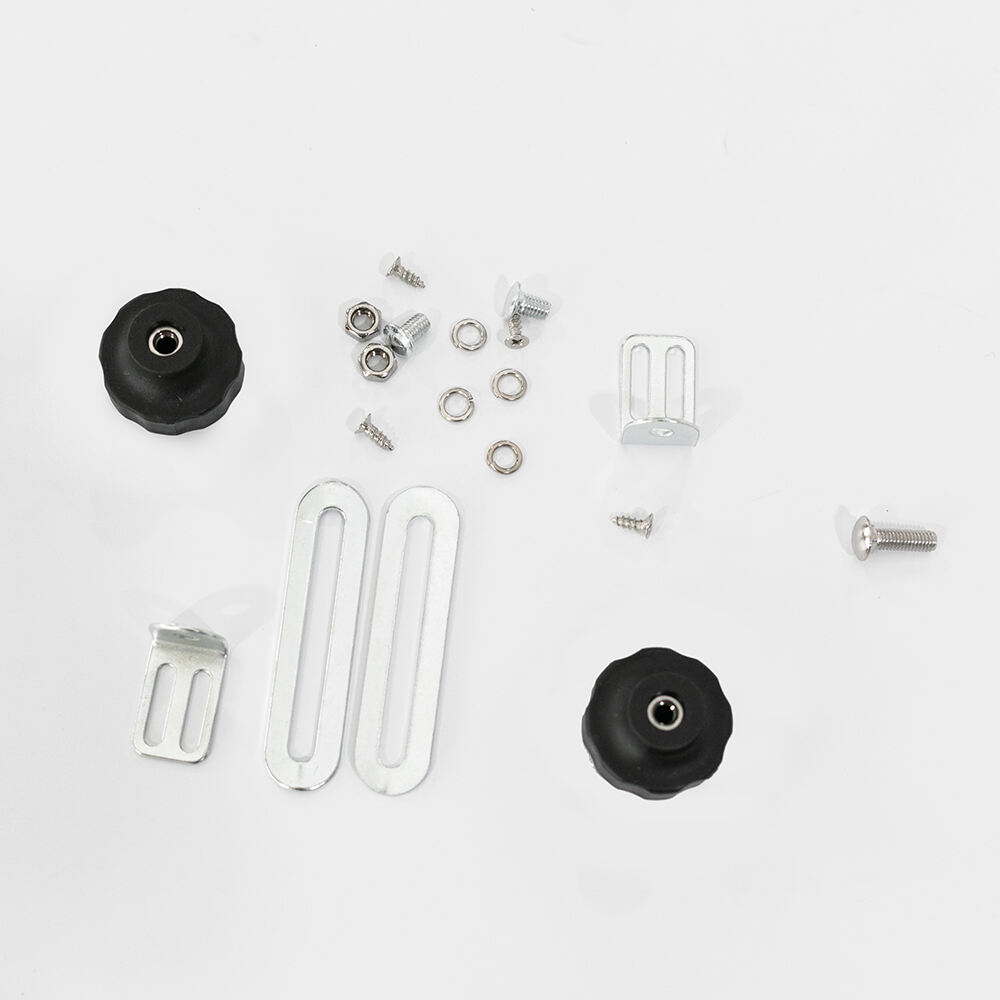
When navigating tight fairway lanes, resort pathways, or warehouse corridors, every driver knows that a single blind spot can lead to a collision. A golf cart mirror is one of the most effective tools available to address this exact challenge. By expanding the driver's field of vision, a golf cart mirror transforms how operators perceive their surroundings, particularly in environments where space is limited and foot traffic is unpredictable.
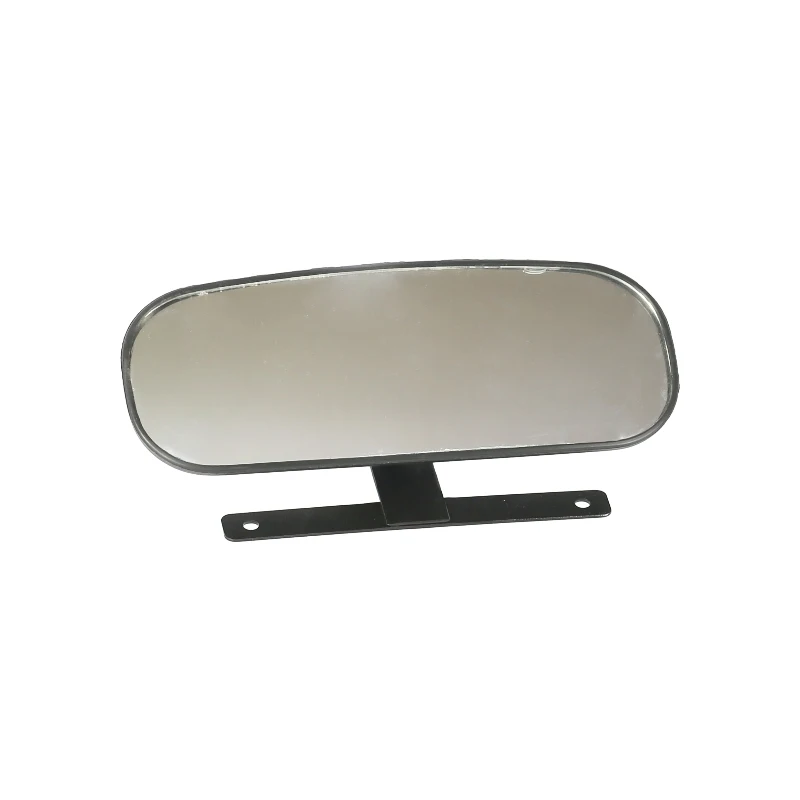
Understanding how a golf cart mirror enhances navigation in narrow paths requires looking at both the physical mechanics of visibility and the behavioral changes it encourages in drivers. A well-positioned golf cart mirror does not merely reflect images — it actively reshapes the driver's spatial awareness and reaction time. This article explores the practical roles that a golf cart mirror plays when paths become tight, turns become sharp, and margins for error shrink to almost nothing.
The Visibility Challenges of Narrow Path Navigation
Why Narrow Paths Demand Extra Visual Coverage
Narrow paths present unique visibility problems that standard forward-facing sightlines cannot solve alone. When a cart travels through a corridor barely wider than the vehicle itself, the driver must simultaneously monitor what is ahead, what is approaching from behind, and whether passengers or cargo extend beyond the cart's edges. Without a golf cart mirror, the driver is forced to turn their head repeatedly, which slows the vehicle's responsiveness and creates its own risk. A properly mounted golf cart mirror eliminates that physical strain by delivering continuous rear and side visibility without head movement.
Resort pathways, golf course cart paths, and campus service roads are frequently designed with minimal clearance. A golf cart mirror allows the driver to read the full picture of a confined space in real time. When a pedestrian appears at the edge of a narrow turn, a golf cart mirror provides the split-second awareness needed to brake or steer early. This is the foundational value of a golf cart mirror in tight-space navigation.
How Blind Spots Affect Cart Control on Tight Routes
Blind spots are not abstract concerns — they have measurable consequences in confined environments. Without a golf cart mirror, the rear corners of the cart remain entirely hidden from the driver. On a narrow path, those blind corners may be only centimeters from a wall, fence, or passing person. A golf cart mirror converts those hidden zones into monitored zones, which directly improves the driver's ability to judge clearance. When a golf cart mirror is mounted at the correct angle, it reveals the rear quarter of the cart and the immediate environment behind it, giving the driver continuous positional data during every maneuver.
Functional Benefits of a Golf Cart Mirror in Tight Spaces
Rear Monitoring and Obstacle Detection
The primary function of a golf cart mirror in narrow-path situations is rear obstacle detection. A golf cart mirror allows the driver to confirm that no person, vehicle, or object is trailing too closely before executing a turn or sudden stop. In busy service areas or crowded resort zones, this capability reduces the risk of rear collisions significantly. A golf cart mirror designed for interior use — such as a long inner mirror — provides a wide-angle perspective of the space directly behind and to the sides of the cart. This wide coverage is especially useful when multiple passengers are seated in rear-facing positions, as a golf cart mirror allows the driver to check on passenger safety without leaving the driver's seat.
The golf cart mirror also assists with reversing in confined spaces. When a driver must back out of a narrow bay or reposition the cart in a tight loading area, the golf cart mirror provides the only reliable visual reference for judging distance from obstacles. Without a golf cart mirror, reversing on a narrow path becomes a guesswork exercise. With one, the driver can see exactly where the rear of the cart is in relation to surrounding structures.
Spatial Judgment and Path Alignment
Accurate spatial judgment is essential when driving through narrow corridors, and a golf cart mirror actively supports that judgment. By reflecting the rear environment, a golf cart mirror helps the driver assess whether the cart is tracking straight along the path or drifting toward one side. This is particularly important on winding paths with raised curbs or close-set landscaping. A golf cart mirror gives the driver a continuous reference point for alignment, which reduces the frequency of micro-corrections that can make narrow-path driving feel erratic. Drivers who use a golf cart mirror consistently report smoother travel through tight sections because they can anticipate position issues before they become contact events.
Installation and Mirror Positioning for Maximum Effectiveness
Choosing the Right Golf Cart Mirror Type
Not every golf cart mirror design delivers equal coverage on narrow paths. An interior long mirror — mounted horizontally across the top of the windshield frame — provides the widest rear view and is particularly effective in multi-passenger carts where the rear seating area partially blocks the driver's natural sightline. A golf cart mirror of this type replicates the function of a standard automotive rearview mirror but is scaled and mounted to match the open-body structure of a cart. For carts that frequently operate in narrow outdoor paths, a golf cart mirror with a wide-angle or convex surface adds additional lateral coverage, helping to detect obstacles at the edges of the path.
Side-mounted variants of the golf cart mirror complement the interior mirror by providing visibility along the flanks of the cart. When a path requires the driver to pass through a gate or narrow opening, the side-mounted golf cart mirror shows exactly how much clearance remains on each side. Combining an interior golf cart mirror with side mirrors creates a complete visibility system that effectively neutralizes most blind spots encountered in narrow-path environments.
Mounting Angle and Driver Line of Sight
Correct mounting angle determines how useful a golf cart mirror actually is during narrow-path navigation. A golf cart mirror mounted too high will show sky and upper obstacles, missing the ground-level hazards most relevant to tight maneuvering. A golf cart mirror angled too low will focus on the cart's own structure rather than the environment. The optimal position for a golf cart mirror places the center of its reflection at roughly mid-body height of an approaching pedestrian at a distance of three to five meters. Drivers should always test the golf cart mirror's angle in the actual environment where the cart will be used, adjusting until the reflection accurately captures the most critical zones behind and beside the vehicle.
FAQ
What type of golf cart mirror works best in narrow indoor paths?
An interior long golf cart mirror mounted across the upper windshield frame is generally the most effective choice for indoor narrow paths. It provides wide rear coverage without side protrusions that might catch on walls or doorframes.
Can a golf cart mirror reduce accidents in tight resort corridors?
Yes. A golf cart mirror directly reduces the likelihood of rear-end and side-contact incidents by keeping the driver continuously informed about what is happening behind and beside the cart. This real-time awareness allows earlier braking and steering corrections on narrow resort paths.
How often should a golf cart mirror be checked for alignment?
A golf cart mirror should be checked before each shift or operational session. Vibration from regular use can gradually shift the mirror angle away from its optimal position, reducing its effectiveness during narrow-path navigation. A quick visual check and minor adjustment take only seconds but preserve the full safety benefit of the golf cart mirror.