
 EN
EN
Fleet managers who oversee large numbers of golf carts, utility vehicles, or light commercial carts often discover that a seemingly minor component — the wheel cover — generates a surprisingly high volume of maintenance calls, replacement orders, and operational interruptions. What appears to be a straightforward cosmetic part turns out to carry real functional and logistical weight when multiplied across dozens or hundreds of vehicles. The question of whether fitment issues are more common than expected in fleet use is not rhetorical — for many operations, the answer is a clear yes, and understanding why requires a closer look at how fleets actually use and manage these components.
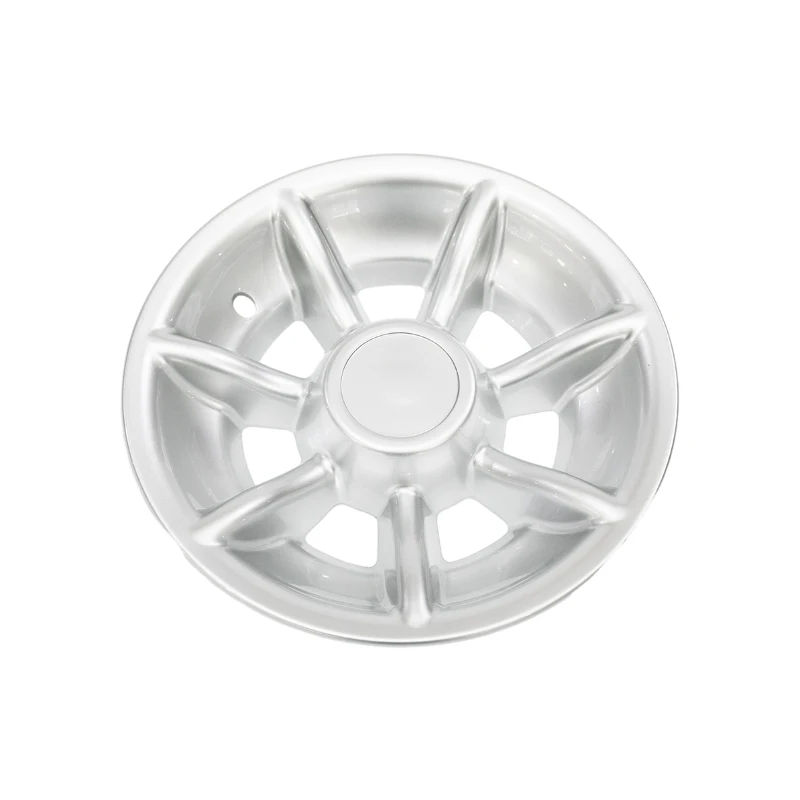
A wheel cover that fits perfectly on a single privately owned cart may behave very differently when installed across a mixed fleet with varying rim ages, rim tolerances, and usage intensities. Fleet environments introduce variables that individual ownership rarely encounters — high rotation of vehicles, inconsistent installation by multiple staff members, exposure to rough terrain, and the cumulative wear that comes from constant daily use. This article examines why wheel cover fitment problems are more prevalent in fleet settings than most buyers anticipate, and what practical steps can reduce their frequency and impact.
Why Fleet Use Creates Unique Fitment Challenges
The Scale Factor and Its Hidden Complexity
When a single operator installs a wheel cover on one cart, any fitment issue is immediately noticed and corrected. In a fleet of fifty or a hundred vehicles, the same issue may go undetected across multiple units until it becomes a visible problem — a cover that has partially detached, a rim that shows uneven wear, or a vehicle that develops a vibration during operation. Scale amplifies every small inconsistency in fitment quality.
Fleet procurement teams often source wheel cover units in bulk, sometimes from a single batch or a single supplier order. If that batch has even a minor dimensional variance — slightly tighter retention clips, marginally different inner diameter — the problem is replicated across every unit in that order. What would be a one-off issue in individual purchasing becomes a systemic fitment problem affecting dozens of vehicles simultaneously.
This scale factor is one of the primary reasons fitment issues are underestimated before fleet deployment. Procurement decisions are often made based on sample testing of one or two units, which may not reveal the variance that appears across a full production batch. Experienced fleet managers learn to request tolerance specifications and batch consistency data before committing to large wheel cover orders.
Mixed Rim Conditions Across a Fleet
A fleet that has been operating for several years will inevitably contain vehicles with rims in varying states of wear. Older rims may have minor deformations, surface oxidation, or dimensional drift from repeated impacts. A wheel cover designed to fit a new rim to specification may sit loosely or unevenly on a rim that has experienced even modest deformation over time.
This is a fitment challenge that is almost invisible during initial procurement. The wheel cover fits the new vehicles perfectly, and the purchase is approved. Over the following months, as the same cover is rotated to older vehicles during maintenance cycles, fitment problems begin to emerge. The cover itself has not changed — the rim condition has, and the cover's retention design was not built to accommodate that variance.
Fleet operators who understand this dynamic tend to specify wheel cover products with wider retention tolerance ranges, or they maintain separate cover specifications for newer versus older vehicle cohorts. This adds procurement complexity but significantly reduces the rate of fitment failures in the field.
Installation Variability and Its Effect on Fitment Outcomes
Multiple Handlers, Inconsistent Technique
In a private ownership context, the same person typically installs and removes a wheel cover every time. They develop a feel for the correct seating pressure, the right angle of approach, and the tactile confirmation that the cover is properly secured. In a fleet environment, installation is performed by maintenance staff who may rotate shifts, vary in experience level, and apply different amounts of force or technique.
A wheel cover that requires a specific installation method — such as starting at the valve stem position, applying even pressure around the circumference, or using a rubber mallet for final seating — may be installed incorrectly by staff who were not trained on that specific product. The result is a cover that appears seated but is not fully engaged with the rim's retention points, making it vulnerable to dislodging during normal operation.
Standardizing installation procedures and providing brief training when a new wheel cover model is introduced to a fleet can dramatically reduce this category of fitment failure. Simple laminated instruction cards kept in maintenance bays have proven effective in several fleet operations for reducing cover loss rates.
Frequency of Removal and Reinstallation
Fleet vehicles undergo tire rotations, pressure checks, and rim inspections far more frequently than privately owned carts. Each removal and reinstallation cycle subjects the wheel cover's retention clips, tabs, or spring rings to mechanical stress. Over time, these retention features fatigue and lose their original clamping force, leading to progressively looser fitment even on rims that have not changed.
This cycle fatigue is rarely factored into initial product selection. A wheel cover rated for standard use may be tested for a limited number of installation cycles, but fleet use can exceed those cycles within a single year of operation. Procurement teams that evaluate wheel cover products should ask about retention feature durability under repeated cycling, not just initial fitment quality.
Products designed with reinforced retention clips or wider-tolerance spring rings tend to perform better under high-cycle fleet conditions. The upfront cost difference is typically recovered quickly through reduced replacement frequency and lower labor costs associated with cover retrieval and reinstallation.
Terrain and Operational Conditions That Amplify Fitment Risk
Surface Variability in Fleet Operating Environments
Golf course fleets, resort utility fleets, and industrial site fleets all operate across surfaces that introduce vibration, lateral stress, and impact loads that a wheel cover must withstand continuously. A cover that fits securely on smooth pavement may begin to migrate or loosen when the vehicle regularly traverses gravel paths, grass terrain, or uneven concrete.
Vibration is particularly damaging to fitment over time. Repeated micro-vibrations gradually work retention clips away from their seated position, especially if the clip material has any inherent flexibility. Fleet operators in environments with significant terrain variation report higher wheel cover loss rates than those operating on predominantly smooth surfaces, even when using the same cover product.
Selecting a wheel cover with a retention design that accounts for vibration — such as multi-point clip systems or covers with a secondary locking feature — is a practical response to this challenge. The aesthetic design of the cover matters less in fleet procurement than the engineering of its retention system.
Speed and Load Conditions
Utility fleets that carry loads or operate at the upper end of their speed range subject wheel covers to centrifugal forces that are meaningfully higher than those experienced during casual use. A cover that is marginally fitted — seated but not fully engaged — may hold in place at low speeds but begin to shift or detach at higher operational speeds.
This speed-dependent fitment behavior is one reason why fitment issues in fleet use often appear suddenly rather than gradually. A cover may seem fine during slow maintenance yard movement but fail during normal route operation. Fleet managers who investigate cover loss events often find that the failures cluster around specific routes or tasks that involve higher speeds or heavier loads.
Understanding the operational speed and load profile of a fleet before specifying a wheel cover product allows procurement teams to select covers whose retention systems are rated for those conditions. This is a straightforward step that is frequently skipped in favor of selecting based on appearance or price alone.
Procurement and Specification Practices That Reduce Fitment Problems
Defining Fitment Requirements Before Purchasing
The most effective way to reduce wheel cover fitment issues in fleet use is to define fitment requirements explicitly before procurement begins. This means documenting the rim diameter range across the fleet, the rim profile type, the surface finish condition of rims in service, and the operational conditions the cover will face. These inputs should drive product selection rather than being evaluated after a purchase decision has already been made.
A wheel cover specified to fit a 10-inch rim on a new vehicle may not be the right choice for a fleet where half the vehicles have 10-inch rims with two years of field wear. Specifying a cover with a retention tolerance range that accommodates both new and worn rim conditions eliminates a large category of fitment problems before they occur.
Suppliers who can provide dimensional tolerance data, retention force specifications, and cycle durability ratings are better positioned to support fleet procurement decisions than those who offer only visual product descriptions. Asking for this data as a standard part of the procurement process filters out products that are unlikely to perform reliably at fleet scale.
Pilot Testing Before Full Fleet Deployment
Running a structured pilot test on a subset of fleet vehicles before committing to a full order is one of the most reliable ways to identify fitment issues before they become fleet-wide problems. A pilot of ten to twenty vehicles across different rim ages and operating routes will surface fitment weaknesses that sample testing of one or two units will not reveal.
Pilot testing should include vehicles from different age cohorts, routes with different surface conditions, and installation by multiple maintenance staff members. Tracking cover retention, loss events, and installation feedback over four to six weeks provides a realistic picture of how the wheel cover will perform across the full fleet.
This approach adds a few weeks to the procurement timeline but typically prevents the much larger cost and disruption of replacing a poorly fitting wheel cover across an entire fleet after full deployment. For large fleets, the return on a structured pilot is almost always positive.
FAQ
Why do wheel cover fitment issues seem to appear suddenly after months of trouble-free use?
Retention features in a wheel cover — clips, tabs, or spring rings — experience gradual fatigue with each installation and removal cycle. After a certain number of cycles, the retention force drops below the threshold needed to hold the cover securely under operational conditions. This is why fitment failures often appear suddenly rather than progressively, and why covers that performed well initially begin to fail after extended fleet use.
Does the material of a wheel cover affect its fitment performance in fleet conditions?
Yes, material choice has a direct effect on fitment durability. Covers made from higher-grade ABS or reinforced polypropylene tend to maintain their dimensional stability and retention clip integrity better under temperature cycling and repeated mechanical stress than covers made from lower-grade plastics. In fleet environments where covers are exposed to sun, heat, and frequent handling, material quality is a meaningful factor in long-term fitment performance.
Is it worth investing in universal-fit wheel cover designs for a mixed fleet?
Universal-fit designs can simplify procurement and reduce the number of SKUs a fleet needs to manage, but they require careful evaluation. A wheel cover marketed as universal must still be verified against the actual rim diameter range and profile types present in the fleet. Universal designs with wide-tolerance retention systems tend to perform well across mixed fleets, while those relying on a single fixed clip diameter may fit some rims well and others poorly despite the universal label.
How can fleet managers track wheel cover fitment performance over time?
Maintaining a simple log of cover loss events, replacement frequency by vehicle age, and installation feedback from maintenance staff provides the data needed to identify fitment patterns. Tracking which vehicles, routes, or installation staff are associated with higher cover loss rates helps isolate whether the issue is product-related, rim-condition-related, or installation-related. This data also supports more informed procurement decisions when it is time to reorder or switch products.
Table of Contents
- Why Fleet Use Creates Unique Fitment Challenges
- Installation Variability and Its Effect on Fitment Outcomes
- Terrain and Operational Conditions That Amplify Fitment Risk
- Procurement and Specification Practices That Reduce Fitment Problems
-
FAQ
- Why do wheel cover fitment issues seem to appear suddenly after months of trouble-free use?
- Does the material of a wheel cover affect its fitment performance in fleet conditions?
- Is it worth investing in universal-fit wheel cover designs for a mixed fleet?
- How can fleet managers track wheel cover fitment performance over time?