
 EN
EN
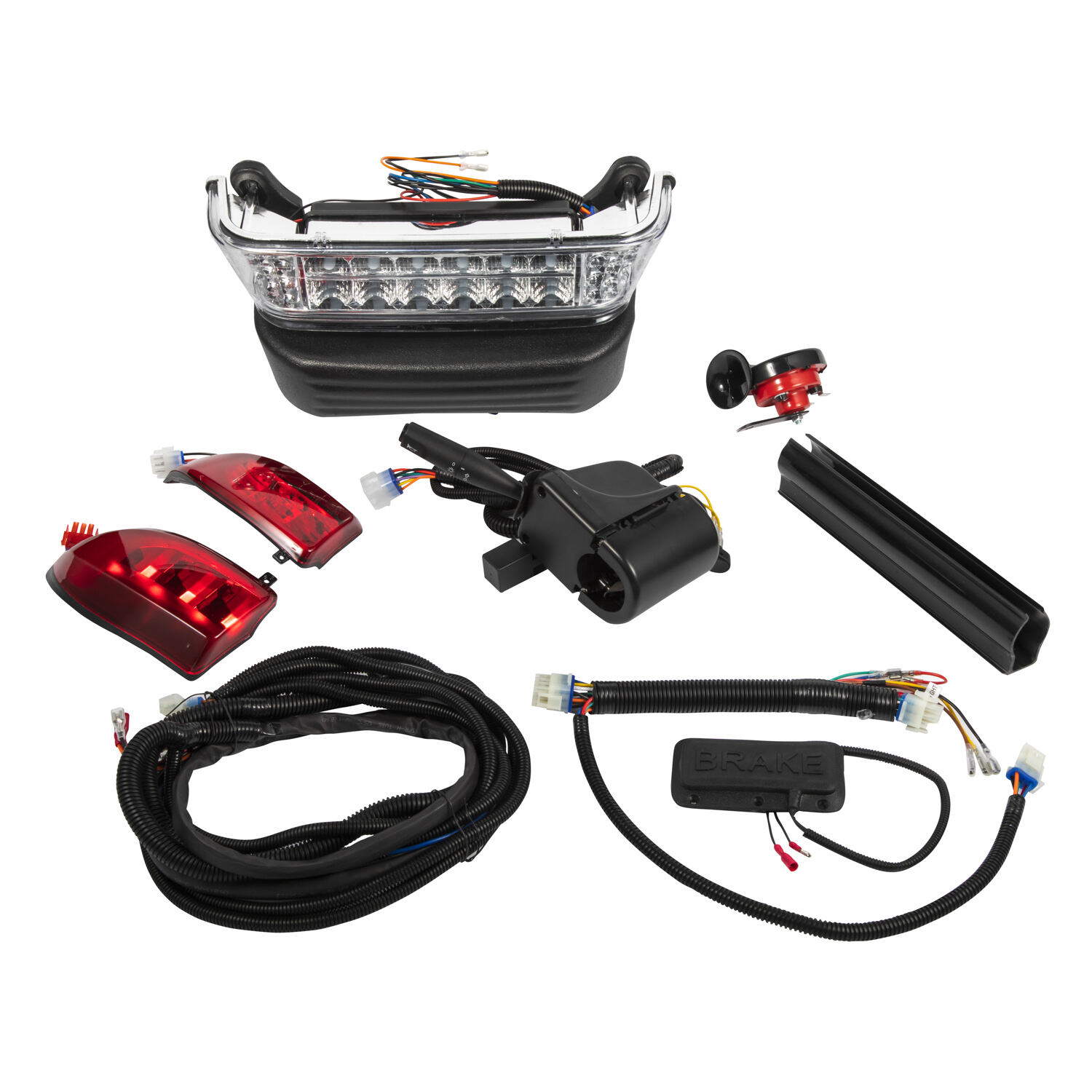
Headlight design serves as a critical safety factor that directly determines how well drivers can navigate through various environmental challenges. From foggy mornings to heavy rainfall and pitch-black nights, the effectiveness of headlight design can mean the difference between safe arrival and potential accidents. Understanding how different design elements impact visibility helps drivers make informed decisions about their vehicle lighting systems.
Modern headlight design incorporates multiple technological advances that work together to enhance visibility across diverse driving scenarios. The interplay between beam pattern, light intensity, color temperature, and housing materials creates a complex system that must adapt to changing road conditions. Each design element affects how light penetrates through atmospheric obstacles and illuminates the road surface effectively.
Core Elements of Effective Headlight Design
Optical Lens Configuration
The optical lens serves as the foundation of headlight design, determining how light rays are focused and distributed across the driving path. Advanced lens configurations use precisely molded surfaces that redirect light beams to create optimal illumination patterns. These patterns must balance between providing adequate forward visibility while preventing glare for oncoming drivers.
Modern headlight design incorporates complex lens geometries that channel light through calculated angles and focal points. The lens curvature and surface textures work together to eliminate dark spots and create uniform light distribution. This careful engineering ensures that the available lumens are used efficiently rather than scattered wastefully into areas where they provide no practical benefit.
Reflector Housing Technology
Reflector housing design plays an equally important role in maximizing light output and beam control. Traditional parabolic reflectors have evolved into complex multi-faceted surfaces that redirect light with mathematical precision. Each facet serves a specific purpose in shaping the overall beam pattern to match different driving requirements.
Contemporary headlight design utilizes computer-modeled reflector surfaces that optimize light gathering efficiency. These surfaces are often coated with specialized materials that maintain reflectivity while resisting degradation from heat and environmental exposure. The reflector geometry works in harmony with the lens system to create the final beam characteristics that drivers experience on the road.
Impact of Beam Patterns on Driving Visibility
Low Beam Distribution Characteristics
Low beam headlight design focuses on providing adequate near-field illumination while maintaining strict cutoff patterns to prevent glare. The beam pattern typically extends approximately 160 feet ahead with a sharp horizontal cutoff that protects oncoming drivers from direct light exposure. This design requirement creates unique challenges in balancing visibility with courtesy.
Effective low beam headlight design incorporates asymmetrical patterns that provide enhanced shoulder illumination on the driver's side while maintaining the protective cutoff. This asymmetry helps drivers detect pedestrians, road signs, and potential hazards that might otherwise remain hidden in darker areas adjacent to the main travel path.
High Beam Performance Parameters
High beam configurations in headlight design prioritize maximum forward distance illumination, typically extending effective visibility to 400 feet or more. These patterns eliminate the restrictive cutoff found in low beams, allowing light to fill the entire forward viewing area. The challenge lies in creating sufficient intensity without creating excessive power consumption or heat generation.
Modern high beam headlight design often incorporates separate optical elements or additional light sources that activate only when maximum illumination is needed. This approach allows engineers to optimize each beam type independently rather than compromising both functions within a single optical system.
Environmental Adaptation in Headlight Performance
Fog and Mist Penetration
Headlight design must account for how different light wavelengths interact with water particles suspended in the atmosphere. Fog and mist create scattering effects that can dramatically reduce effective visibility regardless of the raw light output. The key lies in understanding how beam characteristics influence light behavior in these challenging conditions.
Effective headlight design for foggy conditions emphasizes lower beam angles and warmer color temperatures that penetrate atmospheric moisture more effectively. The beam width becomes more important than intensity, as scattered light from overly bright sources can actually reduce visibility by creating a wall of reflected glare directly in front of the driver.
Rain and Wet Road Conditions
Wet road surfaces create unique visibility challenges that headlight design must address through careful beam shaping and intensity control. Water on pavement acts as a mirror, reflecting light back toward the driver and potentially creating glare that obscures road details. Additionally, falling rain creates a curtain effect that absorbs and scatters light before it reaches the road surface.
Advanced headlight design incorporates beam patterns that minimize reflection from wet surfaces while maintaining adequate illumination of lane markings and road edges. The vertical distribution of light becomes critical, as too much light directed downward creates excessive glare while insufficient low-angle illumination leaves crucial areas in darkness.
Technology Integration in Modern Headlight Systems
Adaptive Lighting Mechanisms
Contemporary headlight design increasingly incorporates adaptive systems that automatically adjust beam patterns based on driving conditions and vehicle dynamics. These systems use sensors to detect steering angle, vehicle speed, and ambient light conditions to optimize illumination in real-time. The integration of electronic controls allows for precise beam shaping that was impossible with fixed optical systems.
Adaptive headlight design enables features such as curve-following illumination, where the beam pattern shifts to illuminate the intended travel path rather than continuing straight ahead. This technology significantly improves visibility during cornering and helps drivers spot potential hazards earlier than traditional static systems would allow.
Light Source Evolution
The evolution from incandescent to LED and laser light sources has fundamentally changed the possibilities within headlight design. Each technology offers different characteristics in terms of efficiency, heat generation, color temperature, and beam shaping flexibility. LED technology, in particular, allows for precise control over individual light elements within a single headlight housing.
Modern LED-based headlight design can incorporate dozens of individual elements that can be controlled independently to create complex beam patterns. This granular control enables features such as selective dimming of specific zones when oncoming traffic is detected, while maintaining full illumination in other areas of the beam pattern.
FAQ
How does headlight design affect visibility in heavy rain compared to clear conditions?
Headlight design significantly impacts rain visibility through beam angle and intensity management. In heavy rain, effective designs use lower beam angles and controlled intensity to reduce the curtain effect created by illuminated raindrops. The beam pattern should minimize upward light that reflects off falling rain while maintaining sufficient forward illumination to penetrate the water barrier.
What headlight design features work best for frequent fog driving?
For fog conditions, headlight design should emphasize wide, low beam patterns with warmer color temperatures around 3000K to 4000K. The beam should have minimal upward projection to avoid illuminating the fog bank directly above the vehicle. Separate fog lights with wide, flat beam patterns complement the main headlight design by providing additional low-angle illumination.
Can headlight design improve visibility for older drivers with declining night vision?
Yes, thoughtful headlight design can significantly help older drivers by providing more uniform light distribution and reduced glare susceptibility. Designs with smoother beam transitions, enhanced side illumination, and warmer color temperatures can improve comfort and visibility. The key is avoiding harsh contrasts and providing adequate illumination of road edges and signage without creating excessive brightness that causes glare sensitivity.
How do different headlight designs perform in snow conditions?
Snow presents unique challenges where headlight design must balance illumination needs with glare management. Falling snow reflects light similarly to rain but with greater intensity due to ice crystal reflectivity. Effective designs for snow use controlled beam intensity with emphasis on road surface illumination rather than long-distance projection. The beam pattern should provide good width coverage while minimizing the snow-illumination effect that can create a visual barrier.
Table of Contents
- Core Elements of Effective Headlight Design
- Impact of Beam Patterns on Driving Visibility
- Environmental Adaptation in Headlight Performance
- Technology Integration in Modern Headlight Systems
-
FAQ
- How does headlight design affect visibility in heavy rain compared to clear conditions?
- What headlight design features work best for frequent fog driving?
- Can headlight design improve visibility for older drivers with declining night vision?
- How do different headlight designs perform in snow conditions?