
 EN
EN
The design of a LED light is far more than an aesthetic consideration — it is a precise engineering discipline that directly determines how well a fixture performs in real-world conditions. From the angle of the beam to the thermal management system built into the housing, every design decision shapes how much usable light reaches the target area and how efficiently electrical energy is converted into illumination. Understanding these relationships is essential for anyone selecting lighting solutions for demanding applications such as off-road vehicles, golf carts, work platforms, or outdoor industrial environments.
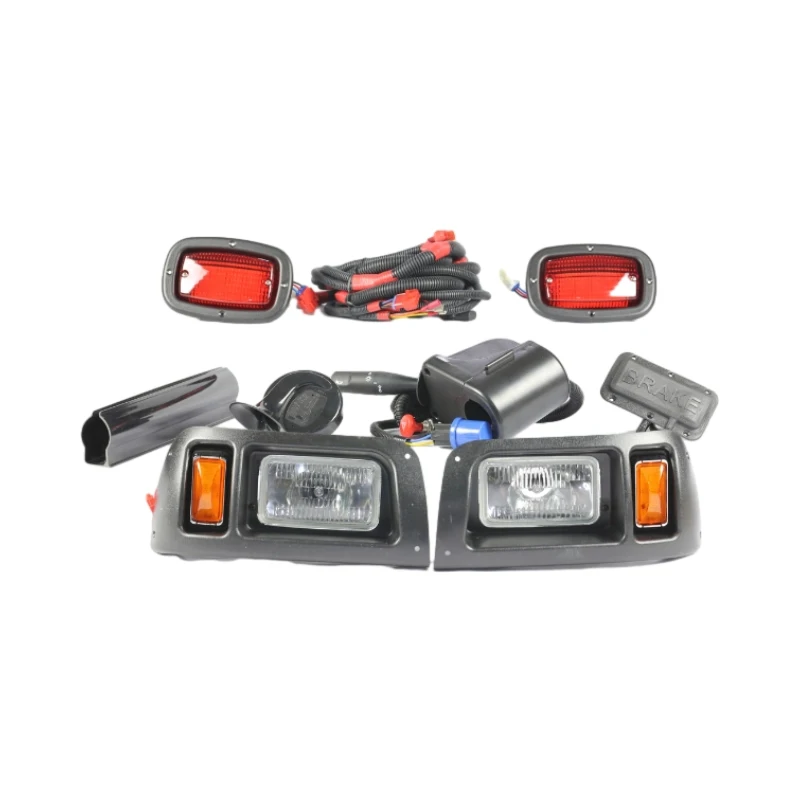
When engineers and procurement professionals evaluate a LED light for a specific application, they are essentially evaluating a system of interdependent design choices. Optical geometry, driver circuitry, heat dissipation architecture, and housing materials all interact to produce the final output characteristics. A well-designed LED light does not simply emit more lumens — it delivers the right lumens, in the right direction, with minimal waste, and sustains that performance over thousands of operating hours. This article explores how each layer of LED light design contributes to both visibility outcomes and energy efficiency gains.
The Role of Optical Design in Maximizing Visibility
Beam Angle and Light Distribution Patterns
One of the most consequential design variables in any LED light is the beam angle, which determines how light is spread across a surface or space. A narrow spot beam concentrates photons into a tight cone, producing high intensity over a small area — ideal for long-distance illumination on trails or work zones where operators need to see far ahead. A wide flood beam disperses light across a broader horizontal and vertical field, which is more appropriate for close-range area coverage such as loading docks, cart paths, or equipment inspection zones.
The optical lens or reflector system built into a LED light is what shapes this distribution. Precision-molded polycarbonate lenses and parabolic aluminum reflectors redirect raw emitter output into controlled patterns with minimal scatter loss. When the optical design is well-matched to the application, the effective illuminance on the working surface increases significantly without requiring more wattage. This is a direct link between optical design quality and energy efficiency — better optics mean more of the consumed power actually contributes to useful visibility.
In practical terms, a LED light with a poorly designed reflector may waste 20 to 30 percent of its output as stray light that never reaches the intended target. Over hundreds of operating hours, this translates into measurable energy waste and reduced visibility performance. Selecting a LED light with application-matched optics is therefore one of the highest-leverage decisions in any lighting specification process.
Color Temperature and Its Effect on Perceived Visibility
Color temperature, measured in Kelvin, is another design parameter that significantly influences how well operators can see in a given environment. A LED light in the 5000K to 6000K range produces a cool, daylight-like white output that enhances contrast and makes it easier to distinguish objects, edges, and surface textures. This is particularly valuable in off-road driving, construction site work, and any scenario where rapid visual processing is required.
Warmer color temperatures around 3000K to 4000K produce a softer, yellower light that can reduce glare in enclosed or reflective environments. The choice of color temperature in a LED light design is not arbitrary — it reflects an understanding of the visual task the light is meant to support. A flood LED light designed for a golf cart operating at dusk on a tree-lined path has different color temperature requirements than a work light mounted on heavy machinery in an open quarry.
Color rendering index, or CRI, is a related design factor that measures how accurately a LED light reproduces the true colors of illuminated objects compared to natural daylight. Higher CRI values, typically above 80, improve the quality of visibility in environments where color differentiation matters — such as identifying warning markings, reading instrument panels, or assessing terrain surface conditions. Good LED light design integrates both appropriate color temperature and adequate CRI to serve the operator's visual needs comprehensively.
Thermal Management and Its Impact on LED Light Performance
Why Heat Is the Primary Enemy of LED Efficiency
Every LED light generates heat as a byproduct of converting electrical energy into light. While LEDs are far more efficient than halogen or incandescent sources, they are still subject to thermal degradation if that heat is not effectively removed from the junction — the point inside the chip where light is produced. As junction temperature rises, two things happen simultaneously: lumen output decreases, and the rate of long-term degradation accelerates. Both outcomes directly undermine the visibility and efficiency advantages that make LED light technology attractive in the first place.
Effective thermal management in a LED light typically involves a combination of a high-conductivity aluminum housing, internal heat spreader plates, and sometimes active cooling elements for very high-power applications. The housing design must allow heat to flow away from the LED chips quickly and dissipate into the surrounding air. In mobile applications like golf carts or off-road vehicles, airflow generated by movement assists this process, but the fundamental thermal pathway must still be engineered correctly from the start.
A LED light that runs cooler maintains its rated lumen output for longer, which means the visibility it provides on day one is closer to the visibility it provides after 10,000 hours of use. This consistency is a practical efficiency gain — operators do not need to compensate for degraded output by adding more fixtures or increasing power draw. Thermal design is therefore inseparable from both the energy efficiency and the long-term visibility reliability of any LED light product.
Housing Materials and Ingress Protection in Demanding Environments
The physical housing of a LED light serves dual purposes: it provides the thermal mass needed to absorb and dissipate heat, and it protects the internal components from environmental factors that would otherwise cause premature failure. In off-road, agricultural, or marine applications, a LED light must withstand vibration, moisture, dust, and temperature cycling without allowing any of these stressors to compromise the optical or electrical systems inside.
Die-cast aluminum housings are the industry standard for high-performance LED light products because aluminum combines excellent thermal conductivity with structural rigidity and corrosion resistance. The surface finish — whether anodized, powder-coated, or left as bare alloy — further influences both heat radiation and long-term durability. A well-sealed LED light with an IP67 or IP68 ingress protection rating can be submerged briefly or exposed to high-pressure water jets without water infiltration, which is critical for maintaining consistent performance in harsh field conditions.
When the housing design is compromised — through thin walls, inadequate sealing, or low-grade materials — the LED light becomes vulnerable to moisture-induced corrosion of the driver board, lens fogging that reduces light transmission, and accelerated thermal degradation of the LED chips themselves. Each of these failure modes reduces both visibility output and energy efficiency, making housing quality a non-negotiable factor in any serious LED light specification.
Driver Circuit Design and Energy Efficiency
Constant Current Drivers and Power Conversion Efficiency
The LED driver is the electronic component that converts incoming voltage — whether from a 12V vehicle system, a 24V industrial supply, or an AC mains circuit — into the precise constant current that LED chips require to operate safely and efficiently. The design quality of this driver circuit has a direct and measurable impact on how much of the input power actually reaches the LEDs as useful light output versus how much is lost as heat within the driver itself.
A high-efficiency LED light driver typically achieves power conversion efficiency of 85 to 95 percent, meaning that for every 100 watts drawn from the power source, 85 to 95 watts are delivered to the LED chips. Lower-quality drivers may operate at 70 to 75 percent efficiency, wasting a significant fraction of consumed energy before it even reaches the light-producing components. In battery-powered applications like golf carts, this difference in driver efficiency directly translates into extended range and reduced charging frequency.
Well-designed LED light drivers also incorporate protection circuits for over-voltage, under-voltage, short circuit, and thermal shutdown conditions. These protections prevent catastrophic failure under abnormal operating conditions and extend the service life of the entire LED light assembly. From an energy efficiency standpoint, a driver that maintains stable output across a wide input voltage range ensures consistent lumen output regardless of fluctuations in the vehicle's electrical system — which is a common challenge in off-road and utility vehicle applications.
Dimming Capability and Adaptive Power Management
Advanced LED light designs increasingly incorporate dimming functionality, which allows operators or automated control systems to reduce light output — and therefore power consumption — when full brightness is not required. This capability is particularly valuable in applications where lighting needs vary throughout an operating cycle, such as a golf cart that needs full flood illumination on dark fairways but only minimal path lighting in well-lit areas near the clubhouse.
Pulse-width modulation, or PWM, is the most common dimming method used in LED light driver design. It works by rapidly switching the current to the LEDs on and off at a frequency too fast for the human eye to detect, with the ratio of on-time to off-time determining the perceived brightness level. When implemented correctly, PWM dimming maintains color temperature and color rendering quality across the dimming range, which means visibility quality is preserved even at reduced power levels.
The combination of high driver efficiency and intelligent dimming capability represents the frontier of energy-efficient LED light design. Systems that can automatically adjust output based on ambient light sensors, motion detection, or operator input deliver the right amount of light at the right time — eliminating the energy waste associated with running a LED light at full power when conditions do not require it.
Mounting Configuration and Application-Specific Design Optimization
How Physical Orientation Affects Light Delivery
The way a LED light is mounted on a vehicle or structure has a significant influence on how effectively its designed beam pattern reaches the intended target area. A flood LED light mounted too high on a golf cart roll bar may direct its beam above the useful working zone, while the same fixture mounted at a lower angle delivers full illumination to the path ahead. Mounting angle, height, and lateral position all interact with the fixture's optical design to determine real-world visibility performance.
Many high-quality LED light products designed for vehicle applications include adjustable mounting brackets that allow fine-tuning of the beam angle after installation. This flexibility is valuable because the optimal mounting geometry varies depending on vehicle height, intended use, and the specific terrain or environment where the LED light will operate. A fixed-mount LED light that cannot be adjusted may deliver excellent performance in one scenario and poor performance in another, even if the fixture itself is well-designed.
For off-road and utility vehicle applications, the vibration resistance of the mounting system is equally important. A LED light that shifts position due to vibration-induced loosening of mounting hardware will deliver inconsistent beam placement, reducing effective visibility even if the fixture continues to operate electrically. Robust mounting hardware with locking mechanisms and vibration-dampening elements is therefore an integral part of the complete LED light design package.
Multi-Function LED Light Designs for Versatile Applications
Modern LED light engineering increasingly addresses the need for versatility by combining flood and spot beam elements within a single fixture. Combo-beam LED light designs use separate optical zones — typically a central spot array flanked by flood-angle emitters — to deliver both long-range visibility and wide peripheral coverage simultaneously. This approach reduces the number of individual fixtures required on a vehicle, which in turn reduces total power consumption and installation complexity.
For golf cart and light utility vehicle applications, a well-designed combo LED light can replace multiple single-function fixtures while consuming less total power and providing superior overall visibility. The key to making this work is precise optical engineering that prevents the spot and flood zones from interfering with each other — a challenge that requires careful emitter placement, individual lens design for each zone, and thorough photometric testing to verify the combined output pattern.
The trend toward multi-function LED light designs also reflects a broader understanding that energy efficiency is not just about watts per lumen — it is about delivering the right light coverage with the minimum number of fixtures and the minimum total power draw. A single well-designed LED light that covers multiple visibility needs is inherently more efficient than two or three simpler fixtures that collectively consume more power and require more complex wiring.
FAQ
How does LED light design affect energy consumption compared to halogen alternatives?
A well-designed LED light typically consumes 60 to 80 percent less power than a comparable halogen lamp while delivering equal or greater lumen output. This efficiency advantage comes from the LED chip's superior conversion of electrical energy into light, combined with optical designs that direct more of that light onto the target area rather than wasting it as unfocused scatter. For battery-powered vehicles like golf carts, this reduction in power draw directly extends operating range between charges.
What design features should I look for to ensure long-term visibility consistency in a LED light?
The most important features for long-term visibility consistency are effective thermal management — typically a die-cast aluminum housing with adequate surface area — a high-efficiency constant current driver, and a sealed housing with at least IP67 ingress protection. These design elements work together to keep the LED chips operating at low junction temperatures, which slows lumen depreciation and maintains consistent output over the fixture's rated service life.
Does the beam angle of a LED light affect its energy efficiency?
Yes, indirectly but significantly. A LED light with a well-matched beam angle for its application delivers more of its total lumen output to the useful target area, which means less power is needed to achieve the required illuminance level. A fixture with a poorly matched or poorly controlled beam pattern wastes a portion of its output as stray light, effectively reducing the useful efficiency of the system even if the LED chips and driver are operating at high efficiency.
Can a LED light designed for off-road vehicles be used effectively on golf carts?
Many LED light products designed for off-road vehicle applications are well-suited to golf cart use, provided the beam pattern, mounting configuration, and power input range are compatible with the golf cart's operating environment and electrical system. Flood-beam and combo-beam LED light fixtures designed for 12V systems are particularly versatile and can deliver excellent path and area illumination for golf cart applications while consuming minimal power from the cart's battery pack.
Table of Contents
- The Role of Optical Design in Maximizing Visibility
- Thermal Management and Its Impact on LED Light Performance
- Driver Circuit Design and Energy Efficiency
- Mounting Configuration and Application-Specific Design Optimization
-
FAQ
- How does LED light design affect energy consumption compared to halogen alternatives?
- What design features should I look for to ensure long-term visibility consistency in a LED light?
- Does the beam angle of a LED light affect its energy efficiency?
- Can a LED light designed for off-road vehicles be used effectively on golf carts?